Why Writers Walk

I work in an academic library at a private Christian university. Each week in the Library, sessions for faculty take place in our center for teaching and learning. Basically this means that faculty offer presentations to other faculty as a way to encourage professional development or personal growth – they are free, and usually a lunch is also provided. (Win-win!)

Not all of the sessions generally apply to me, as I am not traditional teaching faculty, (I am Library faculty), but I go to the ones that seem interesting or pertinent to my job. Last week I had the opportunity to attend a session on creative writing – specifically on how the act of walking positively impacts our writing.

One of our Lang/Lit professors led the session, and she did an amazing job. By the end of it, I was convinced (or maybe reconvinced) that I needed to start walking daily to benefit my writing.

The connection between walking and writing is nothing new – many renowned authors were walkers. In the book Rest: Why You Get More Done When You Work Less, there is a whole chapter discussing the reasons why many creative and successful people (Lin-Manuel Miranda, Ludwig van Beethoven, C.S. Lewis, and Charles Dickens to name a few) incorporated long walks into their routines.

I strongly believe in the connection between walking and creativity – my issue is more just a matter of prioritizing it and doing it.

The day the session was scheduled, it was pouring rain outside, and Abilene also was under a tornado watch. (We don’t typically get tornados, so I didn’t worry too much.) I figured the “Walk and Write” session scheduled for 11:30 would be cancelled. But the rain had stopped by then, and it left everything fresh and clean – really just perfect for walking.

One of the walking/writing exercises I did was called a “photo walk.” During a 10-minute walk, you take a picture of something that strikes your fancy, and then later you write a descriptive paragraph about the photo. You can be as imaginative as you want in describing the picture. If any emotions were stirred within you, you can lean into those while you write. The idea is just to get you inspired.

Read More »
The Mystery of My Half-Blood Prince: Solved!

Earlier this month I wrote a post about how I had discovered my own version of a Half-Blood Prince in a library book I had checked out titled, Your Life As Story. I had checked out the book because I’m interested in writing my own stories, hopefully to publish as a memoir someday.

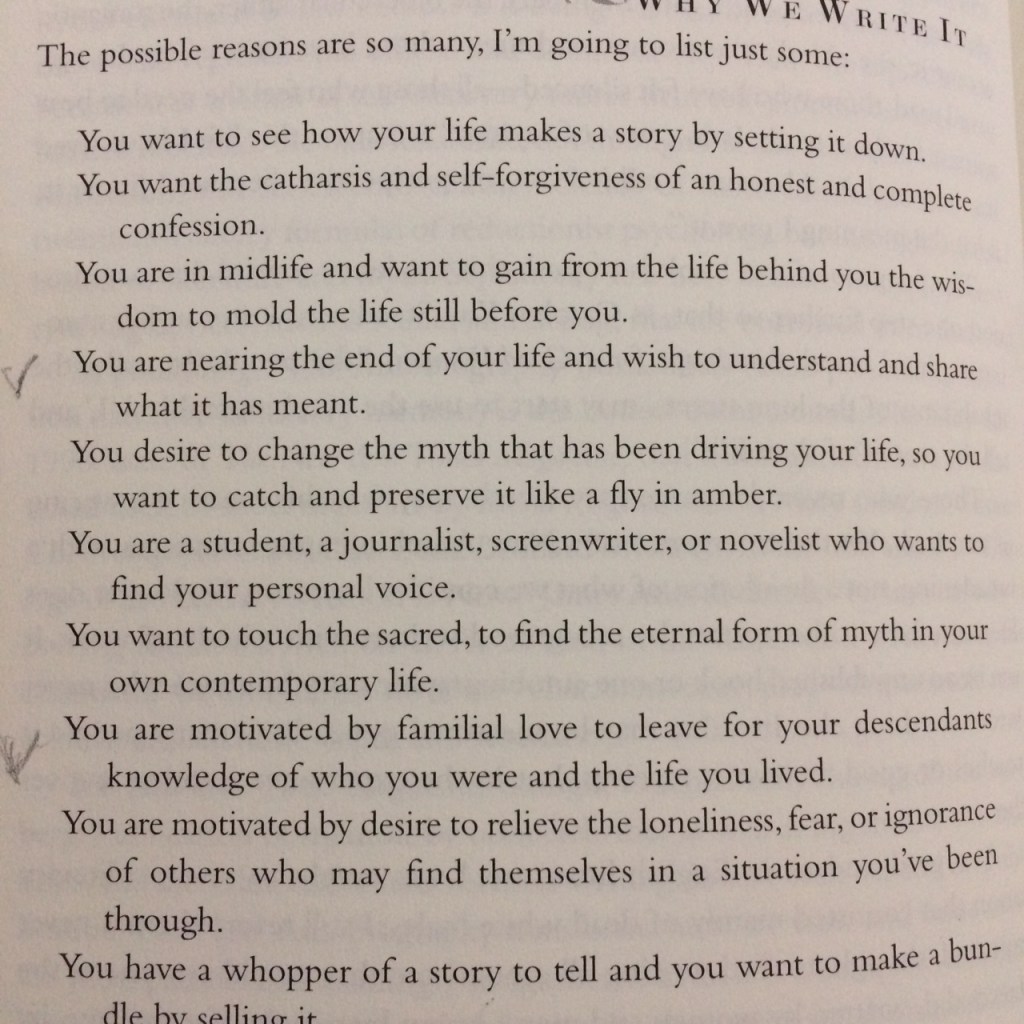
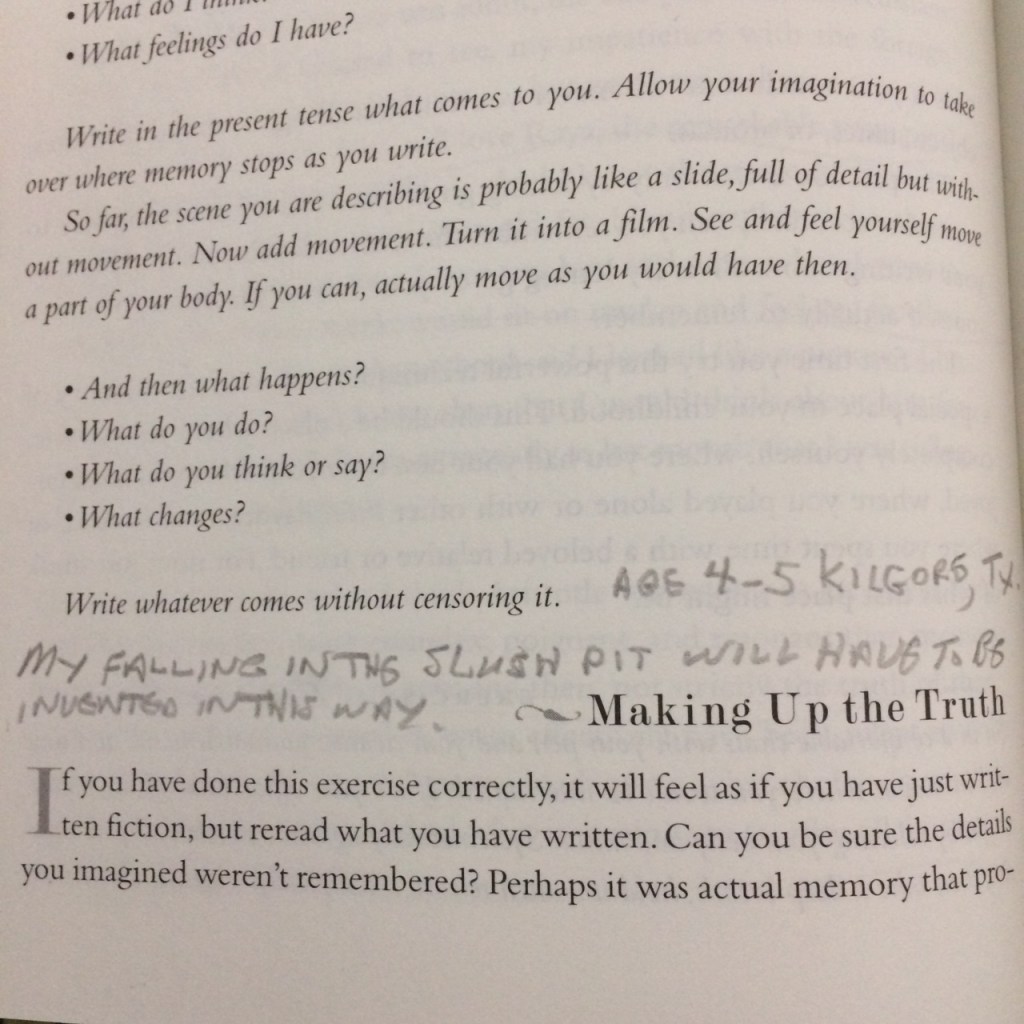
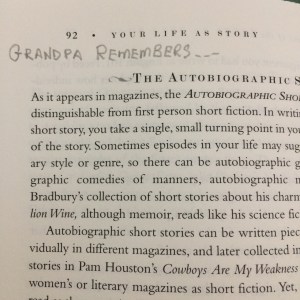
What I found inside the book, besides wonderful tips for memoir writing, were clues about the book’s previous owner: Robert J. Hall. As I read, I slowly got to know this man who was nearing the end of his life, and wanted to leave a legacy of his life stories for his children and grandchildren.

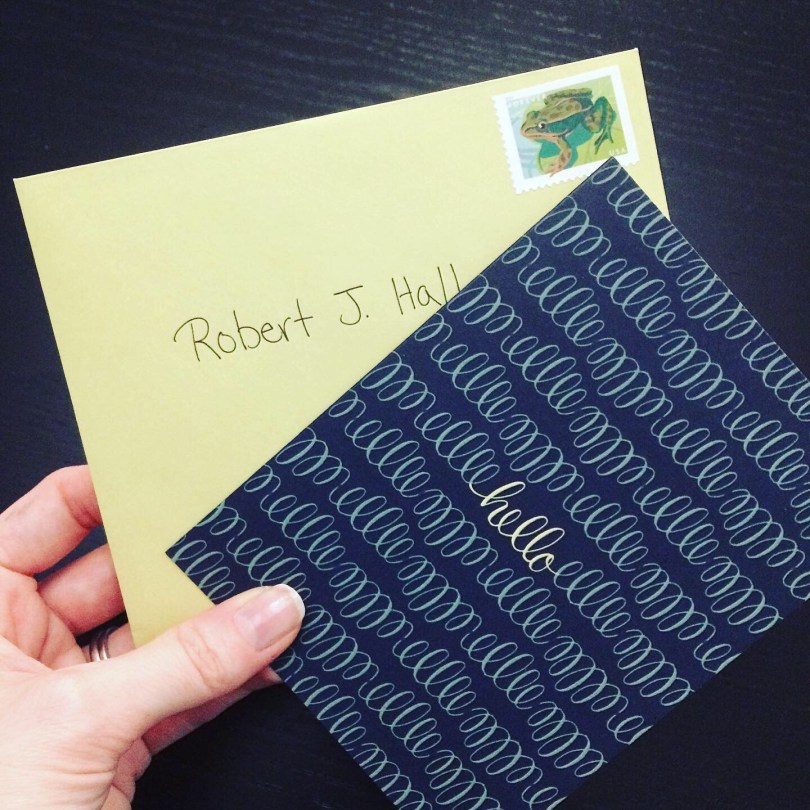
In my last post, I said I planned to write a letter to Mr. Hall, and I did just that. I really wasn’t sure if I would get a response or not.

Well, I did get a response – but it was not what I expected at all. I received an email from the current resident of Mr. Hall’s house, saying that sometimes he still receives mail addressed to Mr. Hall, and that “I typically don’t open what appears to plainly be “junk mail”, but your note clearly did not have that appearance.”

Read More »

My True to Life Half-Blood Prince

As you can gather from reading my blog, I love to write autobiographical stories and snippets from my daily life. One of the main reasons I love writing is that I’m able to share deep and vulnerable parts of myself with others. I always hope to be able to connect with someone else through my writing. Stories are powerful, they allow us to get a glimpse into another person’s life and feelings, and they are an amazing way to develop empathy for people different than we are.

While I know it’s true that you get better at writing the more that you practice writing, I’ve been wanting some more concrete ideas on how to improve as a writer. This led me to check out a book from the library by Tristine Rainer titled, Your Life as Story.

I’m about 8 chapters in, and have found the book to be extremely helpful in its tips and ideas on memoir writing. I’ve been furiously taking notes, trying to capture all the things I don’t want to forget. I knew that the book would be helpful for me to read, but I didn’t expect that even just a few chapters in, it would already change they way I think about writing.

Another surprise from the book was getting to know on a personal level a man named Robert J. Hall – the previous owner of this book before it was donated to the library. His name and address are scribbled on the inside of the front cover, and he has underlined, highlighted, and made notes all throughout the book. As I continue to read, I get more and more insights into this man’s life, and why he owned a copy of this book.

It reminded me of the 6th Harry Potter book, where Harry gets an old copy of an Advanced Potion-Making textbook, and finds it rife with notes and edits from a person who calls themself the “Half-Blood Prince.” Many of the potion recipes have been improved by this Half-Blood Prince, and Harry finds himself doing exceedingly well in his Potions class due to the hints and clues left by the textbook’s previous owner.

I was excited to discover that I basically have my own version of a half-blood prince in my library book. (I’m a big Harry Potter fan! Shout out to my fellow Ravenclaws!) While not nearly as cryptic as the original half-blood prince, I do find myself getting more and more interested in the story behind Robert J. Hall.

Read More »