keyboard key 'F1 Help"

My Anxiety Has Flared Up, Now What?

Most of the time I manage my anxiety well, and it does not affect my quality of life or my ability to function.

But every once and a while, I have a flare up.

As weird as it sounds, in the past, sometimes I wouldn’t even be aware that I was having an excessive amount of anxiety. All I knew was I felt more tired, or everything seemed to annoy me. As I’ve learned to tune into my body more, I have gotten quite good at realizing when I’m in a downward cycle of anxiety.

My red flags for anxiety consist of things like: feeling sluggish, wanting to sleep all the time, having a hard time staying focused on tasks, feeling overwhelmed by clutter or having the desire to clean all the time, and ceasing activities that I enjoy, such as writing or reading for fun. (You may notice I haven’t posted to my blog in almost 2 weeks.)

When I get into this pattern of anxiety, it is easy to stay stuck. I was telling my husband yesterday how overwhelmed I was feeling, and that I felt a constant presence of anxiety. He asked me what I could do to take steps to counter it. My initial thoughts were torn between: A) Nothing, and B) I don’t even remember!

That’s the thing when you’re in the middle of anxiety, it’s hard to think straight and you forget all of the strategies out there that are supposed to be helpful in overcoming your anxiety. So you feel helpless, which just adds to your anxiety.

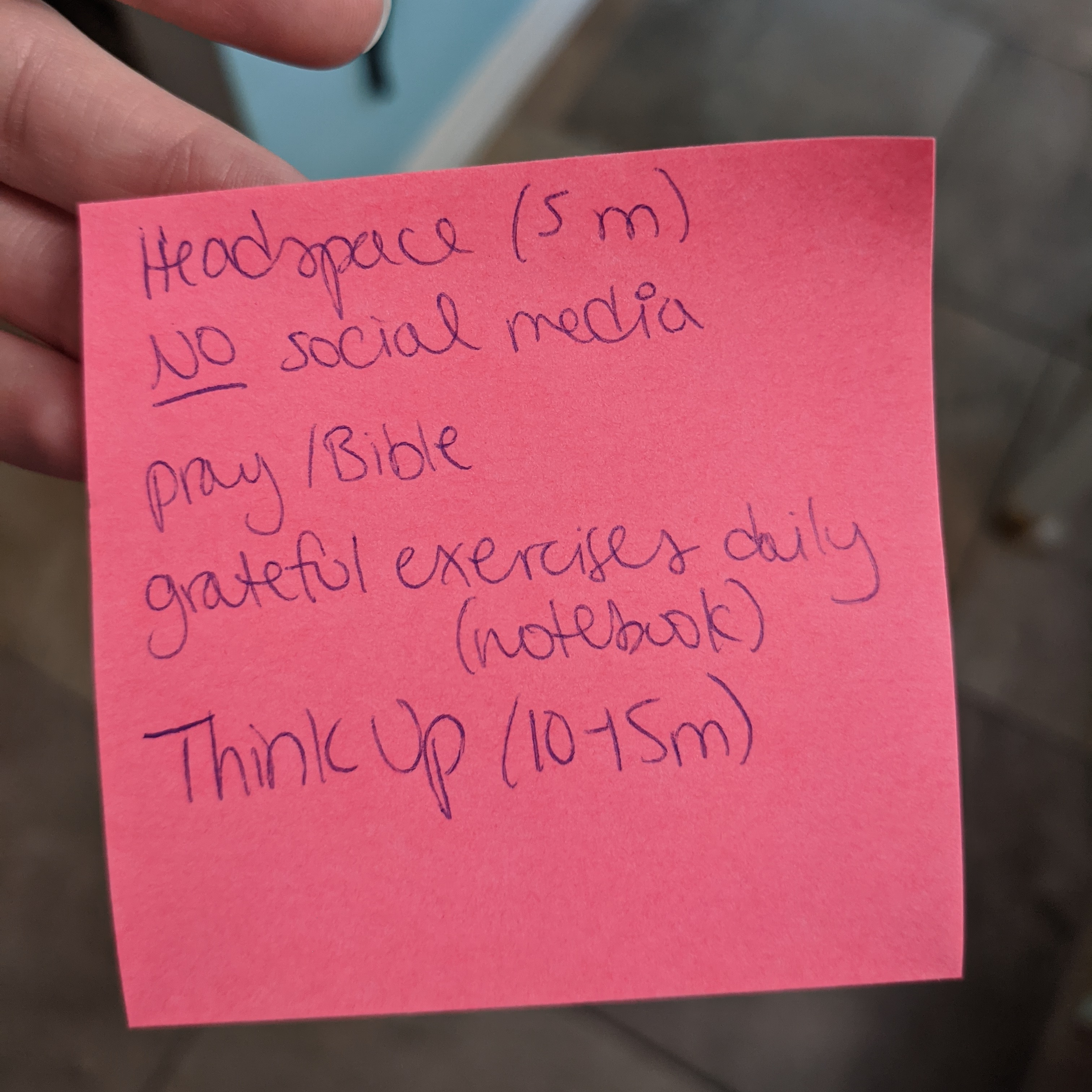
I was, however, determined not to be stuck in the pit of anxiety, and so I sat down with a post-it note and really thought through what I steps I could take to help me during this season of heightened anxiety.

post-it with anxiety remedies

1. Headspace – I only have the free version of the app, but you can still use their “Basics” course and meditate for 5 minutes every day.

2. NO social media – I confess, I frequently check Facebook and Instagram, and I have to say I do believe that sometimes, as research has said, it does make me feel worse after looking at it. I also found I was using it as a way to waste time and avoid doing other things I needed to do, so I’m taking a break for the next week.

3. Pray/Bible – I have a goal to pray and read my Bible every day. It doesn’t always happen, but when my anxiety flares, I know I need to be more purposeful to spend time with God and meditate on His truth. I also pray for help and to have that “peace that passes understanding” (Phil 4:7)

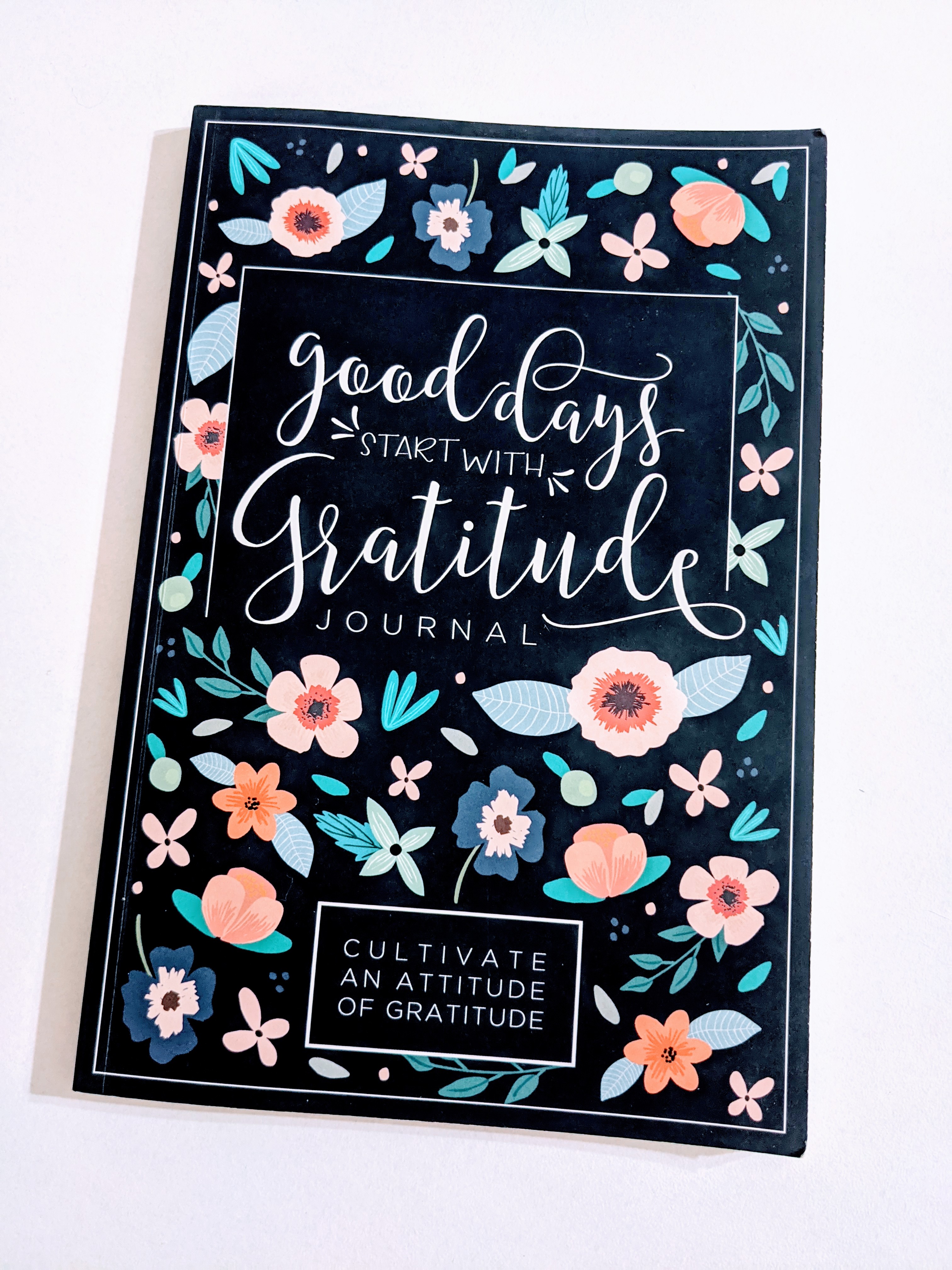
4. Grateful Exercises (daily) – many of us have heard that practicing gratitude is so beneficial for us, and it can even help change our brain and the way we think. I bought a gratitude journal a few years ago, and only was disciplined to write in it every day for about 2 weeks before I stopped. I’m picking this up again to try to focus on positive thoughts.

gratitude journal

5. Think Up – this is a great app, IF you get the paid version (which I have for the iPhone). This is a positive meditation app, and you create your own “playlists” of positive affirmations to listen to. I’m planning to make a new “Anxiety” playlist where I will listen to affirmations like, “I choose to fill my mind with positive, nurturing, and healing thoughts” or “I am learning that it is okay for me to feel safe, calm, and at peace.”

When I am in the middle of dealing with anxiety or depression, I find that the LAST thing I want to do is all of the good things that are supposed to help me. I roll my eyes at meditation, I don’t want to call my counselor, it seems too hard to find energy to do all of the good things I need to do. Maybe some of it is pride, I don’t like admitting that I need help. As a perfectionist, I certainly don’t like admitting that I’m not functioning at my best.

Read More »
street sign with the word "Ask"

From the Readers: Questions About Going to Therapy

I missed posting this for Mental Health Awareness Month back in May, but I figure that the purpose of my blog is to generate awareness around mental health year-round.

Last month I gave some of my followers an opportunity to ask questions anonymously about going to therapy using a Google form I had created. My hope was that if anyone out there felt hesitant about going to therapy, they could ask a question and I (a frequent therapy goer) or my husband, Dean (a licensed therapist) could answer it.

We answered the same question separately from each other, so you may see a little overlap in our advice below.

The question I want to focus on in this post is:

How do you “try out” a therapist to see if they are a good fit without having to retell your trauma every time?

Read More »
repeating white doors, one bright yellow door

Perpetual Problems in Marriage and How We Tried to “Solve” One of Them

My readers know that I’m a big fan of John Gottman and the Gottman Institute. Gottman is the author of the book Eight Dates, which is amazing and I think everyone in a serious relationship should read!

I love how Gottman is very matter of fact about marriage. For example he says, “you can’t be in a relationship and not have conflict. Not if you’re doing it right.” (Eight Dates, p. 6)

So it’s inevitable – we’re going to have conflict no matter how long we’ve been married, how much we love each other, or how good of a person we are.

When my husband and I started going to marriage counseling 6 years ago, I remember wondering how long we would need to go before our problems/conflicts would be solved, before our marriage would be “fixed.” What I’ve learned since then is that fixing our marriage and solving our problems are not synonymous. It doesn’t take the absence of conflict to be in a happy and healthy marriage – in fact Gottman would say it’s impossible.

Some problems are solvable. (Yay!) But most of our relationship problems, sixty-nine percent in fact, are perpetual problems. Perpetual problems, as you may have guessed, are those issues that are going to surface again and again and again in your marriage. (And that’s okay and totally normal!)

So if the absence of conflict is not the sign of a healthy marriage, then what is?

Gottman would say that the ability to continue to talk about your perpetual problems and learning to understand and accept the ways in which you are different from your spouse is key. (Eight Dates, p. 11)

One of the perpetual problems that we have been dealing with in our marriage for over 12 years is HOUSEWORK. The dreaded h-word.

I am the person in our relationship that always feels like more housework needs to be done, and that others are not pulling as much weight in this area. Clutter gives me anxiety. I feel like I can’t relax or have fun if the house is filthy. (Filthy being a very subjective term…)

Dean enjoys a clean house, but his tolerance for a mess is much greater than mine. So by the time he would naturally think about cleaning something, most likely I will have already cleaned it because it was bothering me so much to look at it.

Even taking our personalities into account, I am much more Type-A, a self-declared perfectionist who will notice the tiny details that are not right or are out of place. Dean is definitely more laid back and is not bothered by things to a similar degree (I envy him sometimes). We have learned that if we make a rule to just “clean things when you notice they are dirty,” I will end up doing a lot of cleaning and Dean will not. Not because Dean is a bad person, but because he’s not wired the same way I am.

Housework seems like a silly problem to be battling over for more than 12 years, but I think it’s super common because it’s so easy to get resentful at the other person if you feel like they are not doing their share. Essentially, any time you start keeping score in marriage and trying to determine if things are “fair,” it’s not going to end well. Marriage just isn’t always “fair.” I’m not saying you shouldn’t have conversations about housework, or that both partners should not be putting in effort towards a clean house, but it’s really easy to overestimate how much you do, and to not notice how much the other person has done. We always have a skewed view of reality to some extent, because we always initially see things from our perspective.

I found myself in one of my resentful moods recently, specifically in regards to housework, and Dean and I decided to have a discussion about it. Dean came up with the idea to assign each other chores after making a master chore list, and initially I was not interested. We have tried to do things like that before, and the farthest we usually get is just making the list, not actually doing the chores. I suggested hiring a housecleaner because we both work full time and it’s just hard to find time to actually do the cleaning.

Dean, being the more frugal one in our relationship, really did not want to pay someone else money to clean our house. So, we made a deal. We would try parsing out the chores again and holding each other accountable to doing them. We’d give it a trial period of a few months. If that didn’t work (if the chores were still not getting done) we could try a housecleaner.

Read More »